Eat More Chocolate
It’s February! Valentine’s Day is just about here, and so is the beginning of Lent, but let’s not get too far ahead of ourselves! Today I’m going to explain why you should be eating more dark chocolate. Then I’ll be nourishing you with a great recipe… a little something sweet to keep in the fridge for a healthy afternoon pick-me-up (scroll down if you just want the recipe). And I’ll be nurturing you with a SWEET little prayer.
Did you grow up making homemade Valentine’s Day cards? Every year, my sister and I would dig out the construction paper, doilies, ribbons, buttons, stickers and feathers. Then we would get to work for hours… actually it was more like days. Each winter we spent more and more time on those Valentines, until we hit 13 and were too busy with whatever teenagers in the 80’s did.
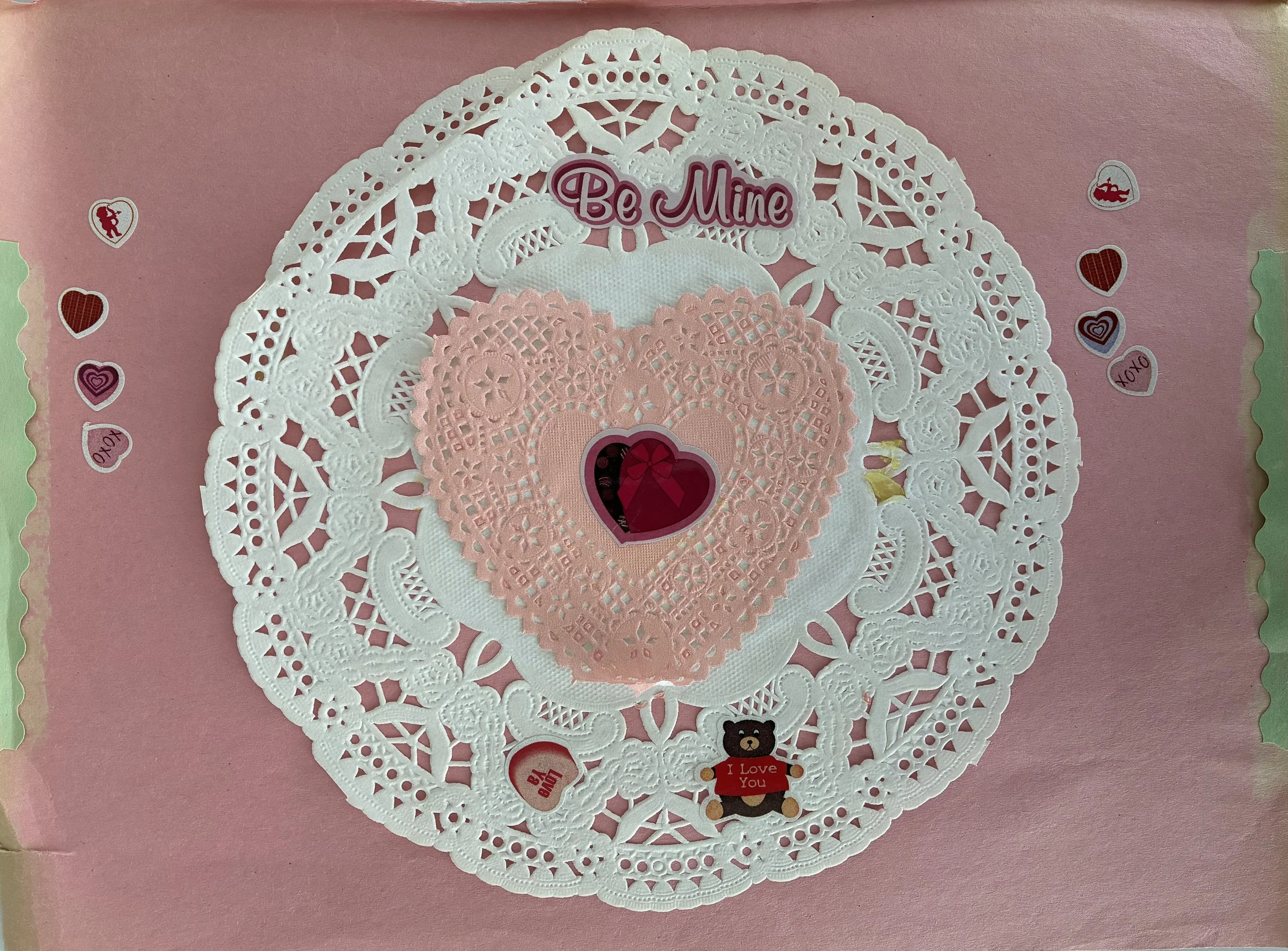
I tried to continue this tradition I loved so much with my children. You see one example here. Must be from very early childhood before this little one learned to write his/her name, as there is no “Love, ____.”
A treasure none the less.
Making Valentines with the kids did not last long; I was so busy homeschooling them, with a husband who was often deployed, that I did not do as good of a job encouraging this creativity as my mother did.
Valentine’s Day eventually evolved into me buying a big box of assorted chocolates for everyone to enjoy after our day of school, piano, sports and dinner. And that’s not a bad thing. Chocolate is actually a very good thing!

So why should you eat more chocolate?
As I’m writing this blog, I can’t stop thinking about the Sponge Bob “Chocolate with Nuts” episode my kids used to watch. In it, Patrick Star convinces a decrepit old sea creature to buy a chocolate bar with this line: “If you rub chocolate on your skin, you will live forever!”
Okay, so maybe that’s not how chocolate works, but a 2006 study showed that long-term consumption of cacao helped the skin shield itself from UV rays while aiding in hydration! Other studies showed that frequent consumption can help decrease BMI and waist circumference (in just 7 days!). Still other studies indicate it is great for brain function, increasing cognitive function by improving blood flow to the brain. (https://www.soletoscana.com/blogs).
Those are fun science facts, but why do we love chocolate so much? We love it because it actually makes us happy! Chocolate helps our gut make the feel-good neurotransmitter serotonin, which quiets the brain and decreases anxiety, anger, and aggression. It makes us feel calm, focused, happy and emotionally stable. An added bonus of serotonin is that it converts to melatonin at night and helps us sleep! (https://my.clevelandclinic.org/health/articles/22572-serotonin). Chocolate is also a good source of magnesium, a calming and relaxing mineral.
This is why cacao is a health food, and I would think twice before giving it up for Lent. For the best benefits, look for chocolate that is at least 70 percent cacao and has healthy sweeteners (not refined sugar). Some brands I like are Lilly’s, Hu, and Dr. Bonner. Trader Joe’s also has some great snacking chocolates made without sugar. (See cover image.)
I’m not going to go too deep into sugar today, but here are 3 reasons to reconsider sugar as your primary sweetener:
1. It steals magnesium, calcium and thiamine from your body to metabolize it. And since calcium and magnesium are what makes our bones strong, studies show that people who consume high-sugar diets have a higher risk of developing osteoporosis. (https://www.getwellen.com/well-guide/sugar-and-bone-health-what-you-need-to-know)
2. Sugar decreases your immune system and the ability of white blood cells to kill bacteria for up to 5 hours. (https://moonmilk.us/blogs/news/sugar-and-immunity-does-cutting-back-boost-your-immune-system)
3. Too much sugar can be addictive— it causes our brain to release dopamine, similar to the way street drugs act in our brain. It also activates opiate receptors, leading to compulsive consumption “despite the negative consequences like weight gain, headaches, hormone imbalances, and more.” (https://www.healthline.com/health/food-nutrition/experts-is-sugar-addictive-drug#What-is-an-addiction)
The good news is that there are plenty of great healthy sweeteners! Opt for natural sources to sweeten things like honey, maple syrup, stevia, monk fruit, and coconut sugar. If you are baking with honey or maple syrup, the proportion is generally: 1/2 cup sticky sweetener to replace 1 cup of sugar. But there are lots of great recipes out there already formulated using alternative sweeteners. Simple google search!
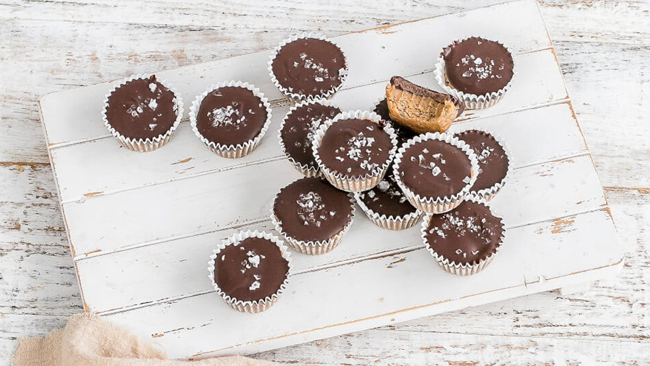
And finally, the recipe you’ve been waiting for! You will love these little No Bake Cookie Dough Bites. They are so easy to whip up! Make a double batch and give a few away, if you can.
TIP: you can make oat flour in your blender with regular oats!
Click the image for the recipe.
One reason I like this recipe so much (other than that it is really yummy and super easy) is because of the addition of a nut butter and some oats. That means that this naturally-sweetened chocolate treat also has protein, fiber, and fat to help with blood sugar stability. (Although I do not advise having this as a stand-alone snack. It would be better for your blood sugar to have it with a healthy meal or snack).
And what could be sweeter than a yummy chocolate treat?
My answer: The Sacred Heart of Jesus!
I love this prayer by St. Margaret Mary Alacoque… asking Jesus for his blessings of health and protection, and the graces of humility, patience and obedience.

So, how about we give up sugar for Lent this year, not chocolate?
With many chocolate-filled blessings,
Elizabeth
PS: Are you in need of some new, easy, and nutritious recipes that you can put on the table in 30 minutes or less?
If you subscribe to my free blog, you will get a welcome email with a beautiful collection of 10 delicious and quick dinner recipes! (If you don’t see it, be sure to check your promotions folder). You will also get my newsletter which comes out when I’m publishing my monthly blog and when I’m offering a new program. I’d love to have you!
Medical Disclaimer: This information is being provided to you for educational and informational purposes only. It is being provided to educate you about how to take care of your body and as a self-help tool for your own use so that you can reach your own health goals. It is not intended to treat or cure any specific illness and is not to replace the guidance provided by your own medical practitioner. This information is to be used at your own risk based on your own judgment. If you suspect you have a medical problem, we urge you to take appropriate action by seeking medical attention.
10 Health Benefits of Dark Chocolate. Sole Toscana. (n.d.). https://www.soletoscana.com/blogs/artigiano/10-health-benefits-of-dark-chocolate?srsltid=AfmBOoogW9rCTY0yubU6OTCE7rTo_a9O5DVtouLOBMDw1jsFkuuObBYv
API, S. (2025, May 5). Sugar and immunity: Does cutting back boost your immune system?. Moon Milk & Co US. https://moonmilk.us/blogs/news/sugar-and-immunity-does-cutting-back-boost-your-immune-system
professional, C. C. medical. (2025, December 31). Serotonin: What is it, Function & Levels. Cleveland Clinic. https://my.clevelandclinic.org/health/articles/22572-serotonin
Schaefer, A. (2023, May 30). Is sugar an addictive drug?. Healthline. https://www.healthline.com/health/food-nutrition/experts-is-sugar-addictive-drug#What-is-an-addiction
Sugar and bone health. WELLEN. (n.d.). https://www.getwellen.com/well-guide/sugar-and-bone-health-what-you-need-to-know