Shorter Days, Brighter You: My Favorite Tips for Fall Energy
With fall comes the change in weather we all enjoy, comfort food, cozy fires, apple picking and pumpkin decorating. What’s not to love? Well, I’ll tell you! I for one, don’t enjoy the shorter days. I grew up in Arizona and spent my childhood summers at my grandparents house on the Jersey shore. I love the sun! So I really miss my evening walk around 7 or 8 when it is still light out, and I’m more comfortable in a skort than in jeans. But the fall and winter sunrises— now they do seem spectacular! Maybe that’s because I’m actually more likely to be awake when the sun is rising this time of year. Ha!
Although, getting out of bed while it is still dark just feels wrong. Is it harder for you to get out of bed too? What is going on?
Our bodies are governed by an internal clock, operating on a 24-hour day. It tells us when to go to bed, when to get up and when it’s time to eat. This is your circadian rhythm. There are certain signals our brain needs to receive to make this work effectively. One the most important is light…not just any light, but light from the sun. In fact, if it’s receiving too much light from other sources, it gets confused. We will get more into that in my next blog.
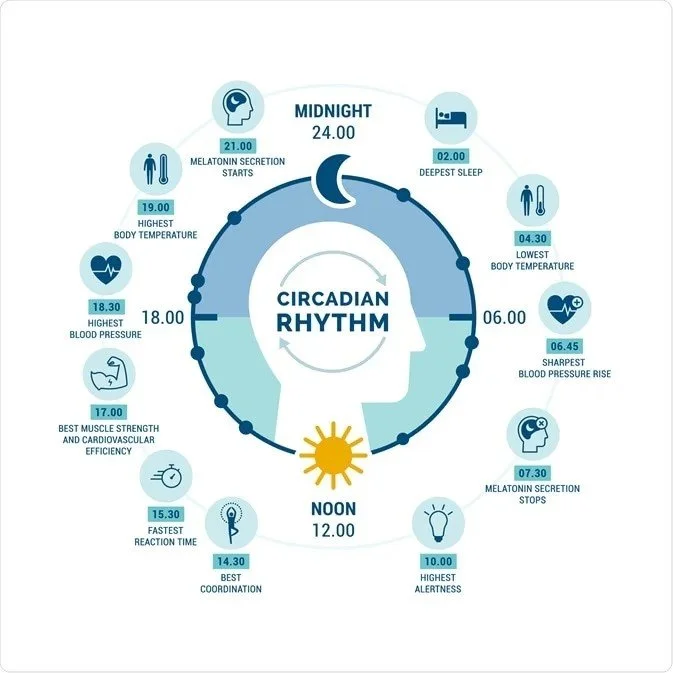
Are you suffering from fatigue or find it difficult to go to sleep and/or stay asleep? Or are you relying on caffeine or sugar to get you through the day? If so, it is possible you have a dysregulated circadian rhythm. When our internal clock gets off, it doesn’t just mess with our sleep, it can also affect things downstream, like our digestion, blood sugar regulation, and our hormones. If you don’t fix this dysfunction, it can contribute to feeling stuck in your sympathetic (fight or flight) nervous system, where you might feel constantly on edge, or wired and tired.
There are a lot of things we can do to help our body re-establish its natural circadian rhythm and have more energy. One of the most effective ways to do this is to get more sun! Our ancestors used to get light from the sun at all times of the day, continually absorbing different wavelengths. Getting these wavelengths in their eyes helped their brain know what time it was and set their internal clock.
The sun is also a major source of energy. It helps fuel our mitochondria, the powerhouse of our cells, where our energy is made. “Red light, in particular, ensures our mitochondria can produce enough adenosine triphosphate, which is the energy source of all cells. Growing appreciation of this is why red and infrared light are now used in so many treatment pathways, including various skin conditions.” (Sunlight, 2023).
And the good news is red light from the sun is highest around the time of sunrise and sunset, when potential damage from the sun will be lowest. Our bodies also use the UVB rays to make the Vitamin D hormone. Vitamin D is great for our immune system, and “more circulating Vitamin D in the body means improved cellular health, brain function, skeletal health (reduces osteoporosis risk), and hormone synthesis.” (UV exposure, 2022)
It’s really on my heart today to tell you this little story about my father, who was diagnosed with stage 4 testicular cancer in 1977, when he was just 33 years old. He went though intense radiation and chemotherapy, killing the cancer cells. But we all know how that can ravage your body. I attribute his complete recovery not just to the experimental treatments he received at the University of Arizona but to the time he spent outdoors.
My father was an avid gardener. We didn’t have much land in our suburban neighborhood home, but boy did he use that plot well—growing vegetables and fruiting trees: olive, fig, pomegranate, lemon, peach, and grapefruit. Not only was he eating all this fresh produce, but he was outside tending to everything, as well as taking care of our little above ground pool. And because he was a teacher, we could take 2 months of vacation every summer to spend at my grandparent’s beach house. Here he helped with my grandfather’s enormous garden, took walks and bike rides on the boardwalk, and hung out with my sister and me at the beach. Amazingly he recovered and lived 32 more years! He is my inspiration and the reason I felt called to work in the health and wellness field.
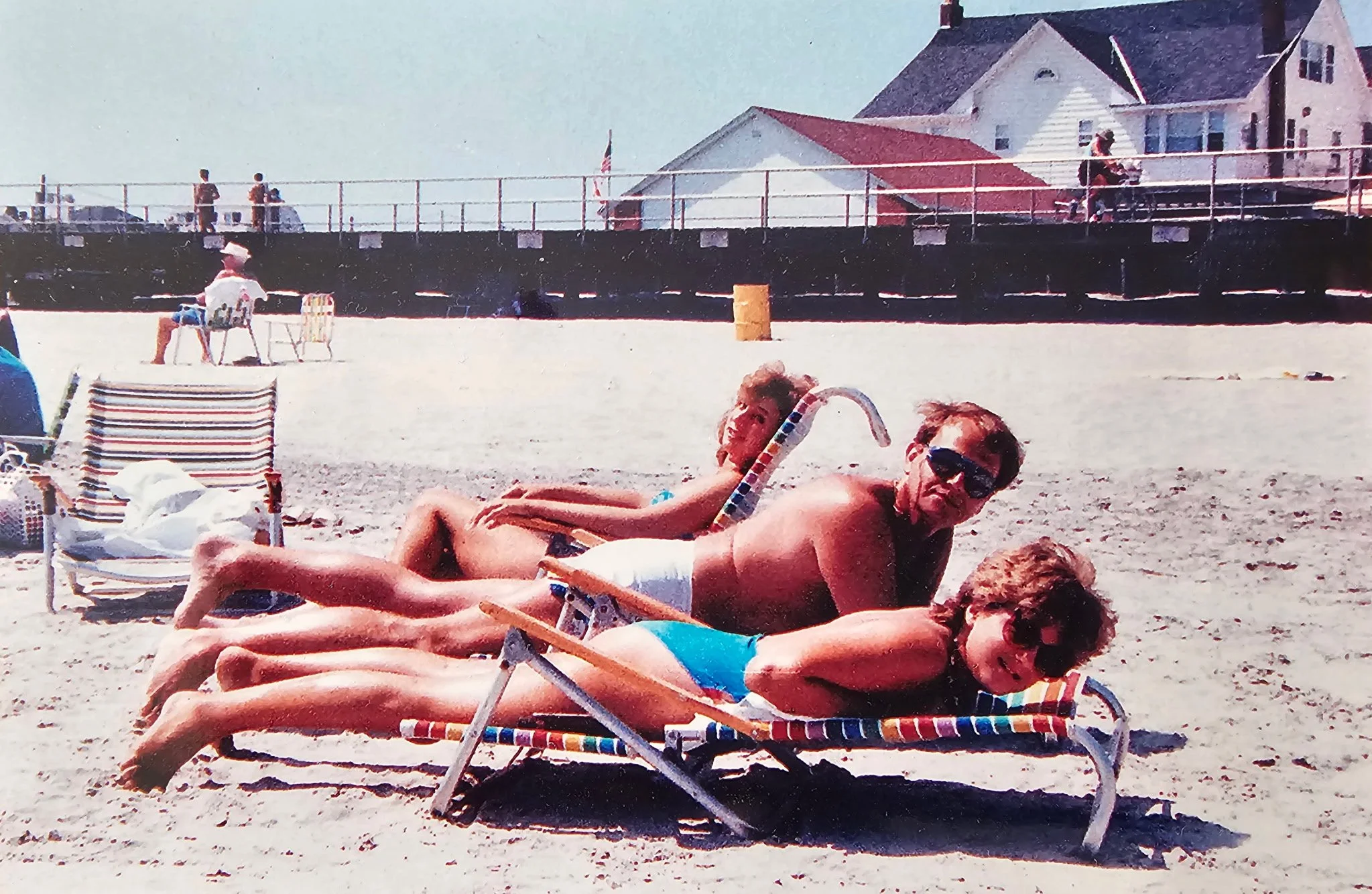
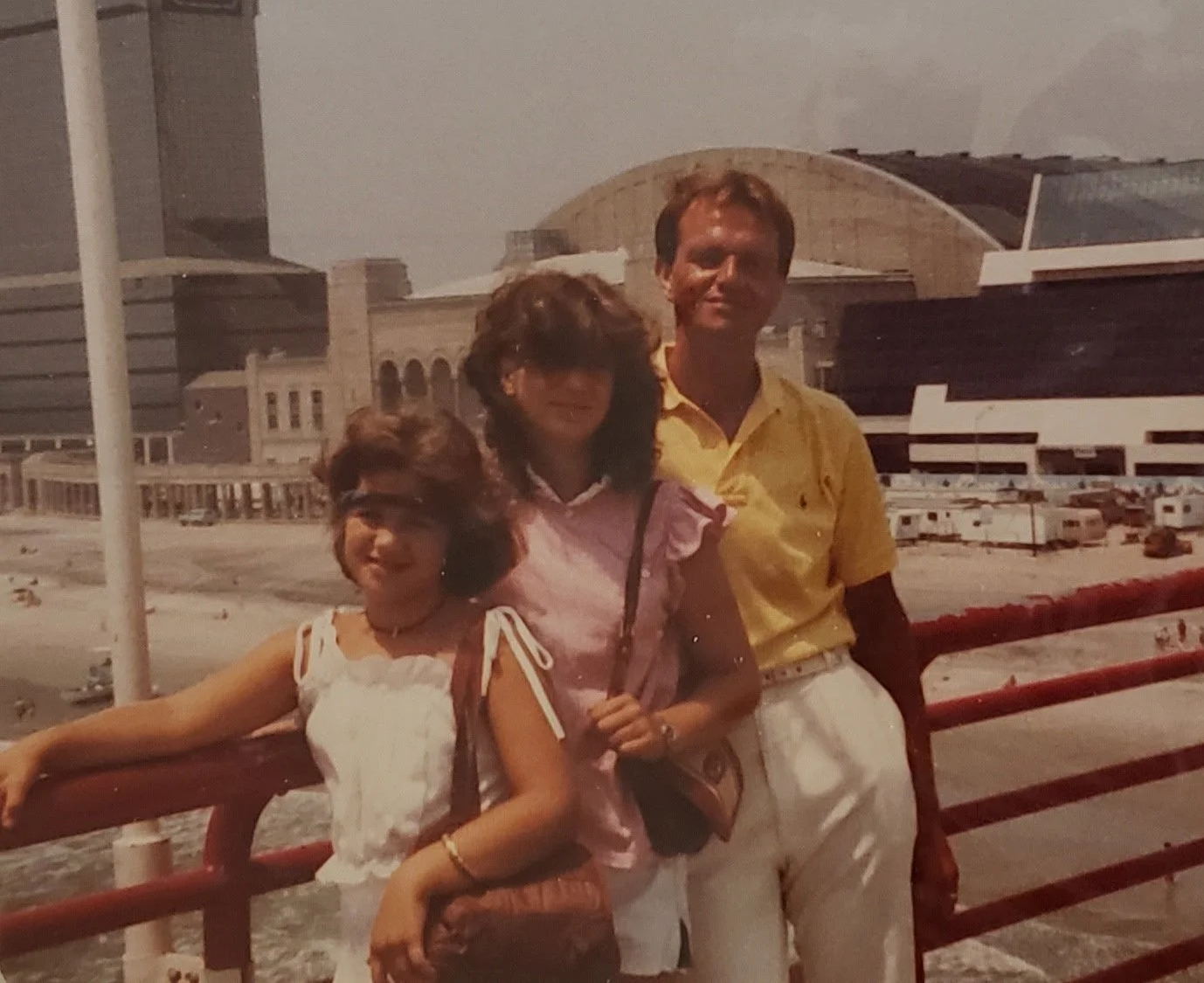
I was hoping I could find a picture of him playing at the beach with us… but you get the idea. This was about 7 years after his cancer diagnosis. Wait, I have one more.. this one is only about 5 years post cancer. You can really see how healthy he looks in this picture. What you can’t see are my eyes, covered by that 80’s hairstyle blowing in the wind! Thank you to my sister for finding these gems.
My NURTURING tip for you today is to get as much of the early morning and late afternoon sun as you can. It will give you more energy and help you reset your body clock when the time changes next month. It will also boost your mood and decrease anxiety, as the sun helps us make serotonin, one of your feel good neurotransmitters.
Keep reading for my tip on how I get my early morning sun, and for my new favorite fall recipe!
I always thought it was neat that in English “sun” and “son” are homonyms, and the sun in the sky (with it’s red light and vitamin D) and the Son of God can heal us in different ways. I love to say my morning prayers in front of the open window while I watch the sunrise-it’s part of my early morning routine before I go downstairs. I know, while I’m lying there in bed, that if I can just drag myself to the window (and open it), the sun will give me energy. And it does! If you can get outside, even better! My husband sits on the patio with his prayer book in the early morning (and lately with a coat and hat—burr). Maybe this isn’t possible with little ones or your work schedule. I get it! Think creatively about what is possible— maybe you can make it a family activity to watch the sunrise and talk about things you are thankful for. Or maybe take a short walk before or after dinner to get the good evening rays and calm down after a stressful day. Even if it is cloudy or raining, you are still absorbing the healthy red wavelengths.
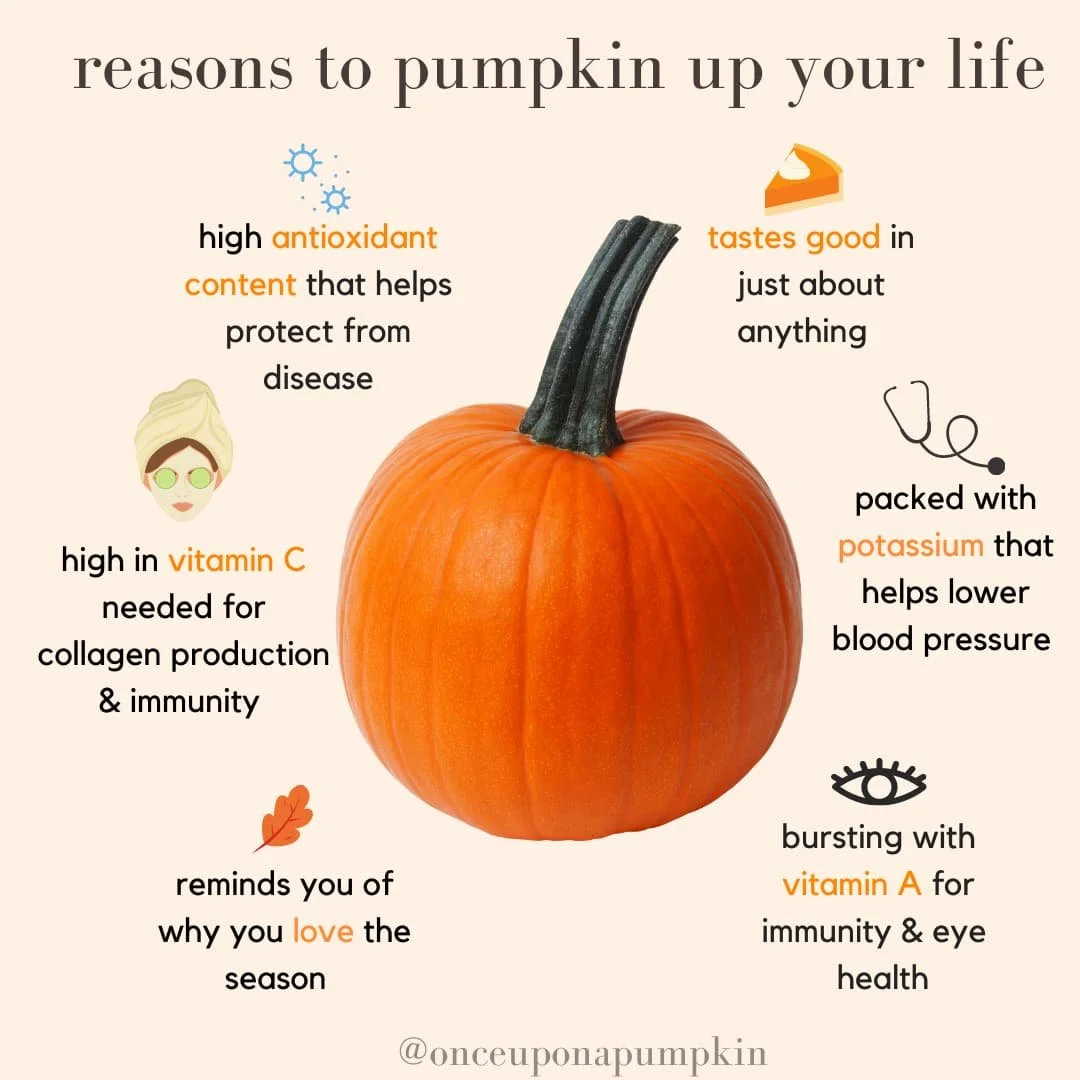
Today I am going to NOURISH you with my latest favorite fall recipe: Pumpkin Ricotta Spelt muffins. They are so moist and delicious!
I think I’ve already gone through 6 cans of pumpkin this month making seasonal goodies, and even making a yummy pumpkin stew during our fall detox.
If you just want the recipe, scroll down and hit the button for your pdf. Or, continue reading to learn about why these muffins are so good for you.
Have you ever used spelt flour? The great mystic and healer of the middle ages, St. Hildegard regarded spelt as a wonder food and advocated for a spelt diet: spelt porridge, spelt bread, spelt coffee to heal the digestive tract (Strehlow et al., 1988, p. 44-45). Freshly ground spelt is actually the flour I use in my sourdough bread.
But spelt is a variety of wheat so it does have gluten in it. If that bothers you, use oat flour or a gluten free flour. Tip: if you have a vitamix, you can make your own flour from whole oats and whole grains!
And these muffins are full of fiber, fat and protein to keep you full longer— great for breakfast, a snack, or dessert.
2 muffins contain 12 grams of protein, from the nuts, ricotta, egg and spelt. Cook an egg or two to eat with the muffins and you have a great breakfast that will keep you full with steady energy all morning long! If a few dark chocolate chips happen to fall into the batter, I don’t think anyone will complain. (Lily’s chocolate chips are a great sugar free brand.) Leftovers are so yummy toasted and spread with Kerrygold butter.
If you need more help regulating your circadian rhythm and sleep, please reach out to me for a free discovery consultation.
Many fall blessings to you,
Elizabeth
PS: Are you a busy mom in need of some new, easy, and nutritious recipes that you can put on the table in 30 minutes or less?
If you subscribe to my free blog, you will get a welcome email with a beautiful collection of 10 delicious and quick dinner recipes! (If you don’t see it, be sure to check your promotions folder). You will also get my newsletter which comes out when I’m publishing my blog twice a month, or when I’m offering a new program. I’d love to have you!
Medical Disclaimer: This information is being provided to you for educational and informational purposes only. It is being provided to educate you about how to take care of your body and as a self-help tool for your own use so that you can reach your own health goals. It is not intended to treat or cure any specific illness and is not to replace the guidance provided by your own medical practitioner. This information is to be used at your own risk based on your own judgment. If you suspect you have a medical problem, we urge you to take appropriate action by seeking medical attention.
Joseph Kandel, M. D. (2024, February 2). UV exposure: The good & the bad. Neurology Office Joseph Kandel M.D. https://neurologyoffice.com/uv-exposure-the-good-the-bad/
Strehlow, W., Frawley, D., Hertzka, G., & Strehlow, K. (1988). Hildegard of Bingen’s Medicine. Bear & Company.
Sunlight as a key human energy source. Electromagnetic Nutritional Hub. (2023, February 2). https://electromagneticnutritionalhub.com/latest-blogs/sunlight-as-a-key-human-energy-source/?emailpreview=true#:~:text=The%20electromagnetic%20spectrum%20and%20us,rely%20on%20input%20from%20light.
Yolanda Smith, B. Pharm. (2021, February 2). What is the circadian rhythm?. News. https://www.news-medical.net/health/Circadian-Rhythm.aspx