The recipe for dark days: Golden light and golden bone broth
Gold isn’t just a precious metal, it is a color we often see in nature in fall, that our eyes are instinctively drawn toward. It is comforting, beautiful, majestic and soothing all at the same time. And exposing ourselves to the healing rays of the sun at the golden hour of sunrise and sunset sets us up for a good day and peaceful rest. It is also the color of a nourishing bone broth recipe I’m sharing with you at the end of this blog. You can scroll down to the end if you just want the recipe. But if you want to hear about how messed up my winter of 1995 in Alaska was, and want some tips on adjusting to the dark days ahead, read on…
Have you ever lived in Alaska? Late fall and winter are so dark there, and the days are so short—so short that when my kids woke up from naps at 3:00pm it was already dark. Talk about confusing their circadian rhythms!
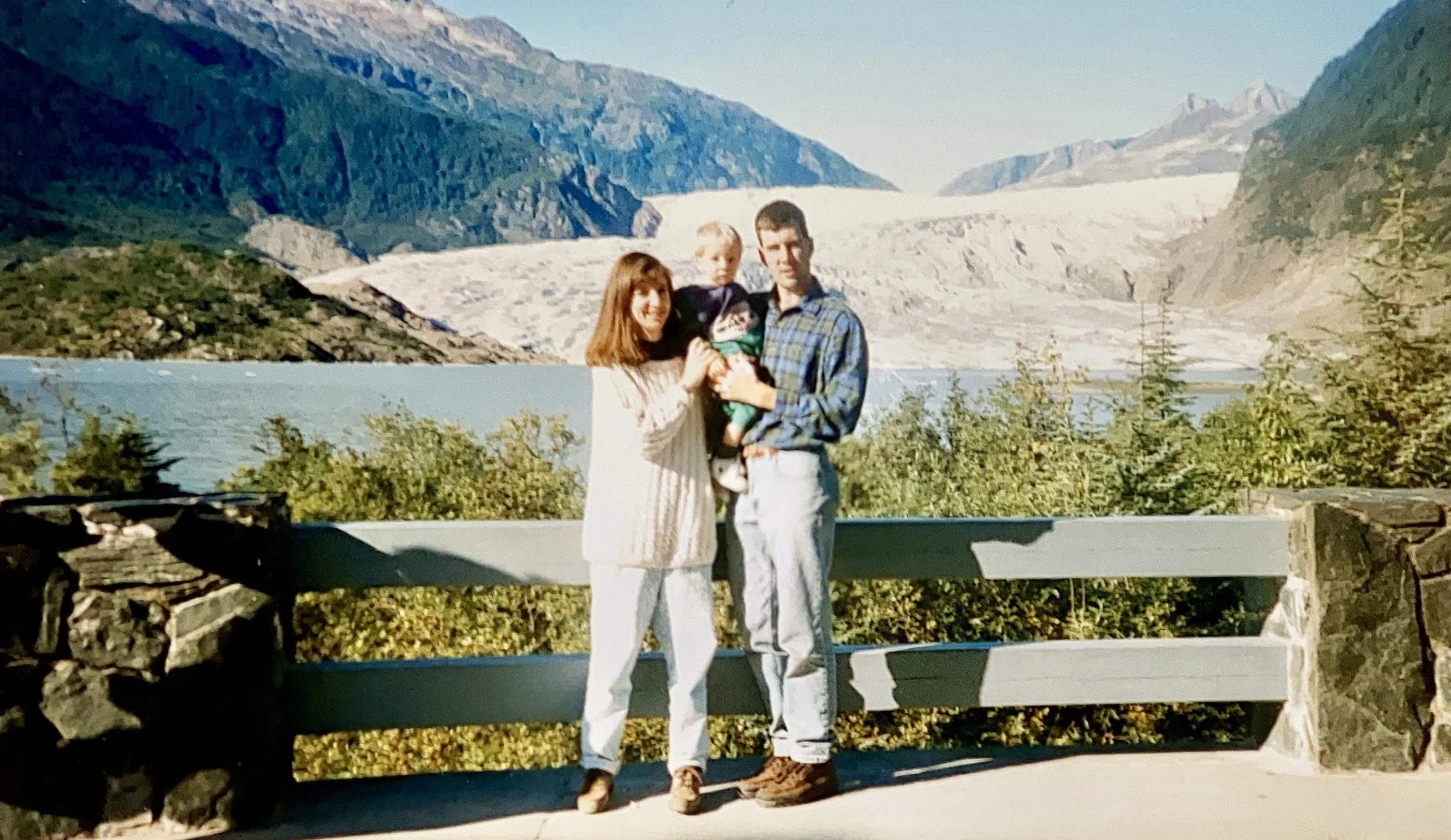
Me, 5 months pregnant, posing with my husband and first born in front of Mendenhall Glacier, Juneau, 1995
My husband served two Coast Guard tours in Alaska, where we lived for 5 years early in our marriage. The first winter in Juneau was a blur— I was 7 months pregnant with my second baby, when our 22 month old son suffered a hand injury requiring an intense 5 hour surgery. Very stressful for our little family so far from our extended family. Couple that with having less than 6 hours of sun a day— we figured out real quick why everyone had “happy lights.” It was to combat Seasonal Affective Disorder, aptly named to fit the acronym SAD! And if 6 hours of sunlight doesn’t sound all that bad to you, you probably didn’t grow up in Arizona, like I did.
Also, in Juneau in the winter, the sun barely gets above the horizon— it just skirts it for 6 hours, then dips below it for 18. So even when the sun is shining, it’s not very bright. Oh and did you know that Juneau is actually in a rain forest? So you really never see the sun anyway. I think that year we had 156 consecutive days of precipitation. On top of that, our house was situated against a mountain, where no sun shone in our windows for months at a time.
We were definitely lacking in our vitamin D stores in the winter; while my son was recovering from his hand surgery, he developed pneumonia and bronchitis, and I ended up on bedrest with a cough so bad I broke a rib or two. I didn’t like winter in Alaska much after that. Once I learned that we were either gaining 5 minutes of sun a day or losing 5 minutes of sun a day, my saddest day of the year became the summer solstice because I knew that marked the transition from gaining light to losing light.
In spite of all that, Juneau was one of the most beautiful places I have ever been. Locals always said that 1 sunny day in Juneau beat 10 sunny days anywhere else. When the sun came out, the whole town burst outside- strolling through the quaint downtown, hiking the trails around Mendenhall Glacier, picking berries on Douglas island, kayaking on Auk Lake, and in the winter— skiing or sledding at Eaglecrest. Living in Alaska made me appreciate the sun in ways I had always taken for granted.
In my last blog, I suggested that you try to get outside 1-3 times a day when the sun wavelengths are different. I also discussed how the SUN gives us more energy. Did you know that the sun also helps us make seratonin —a happiness neurotransmitter? Then at night your seratonin converts to melatonin! The decreased amount of sun this time of year is one reason why a lot of us get the winter blues. If you are affected by this, you might want your own (SAD) light therapy box. There are also certain things we do, unintentionally, that inhibit the healing rays of the sun and our body’s natural response to it, contributing to decreased melatonin, trouble sleeping, and symptoms of depression.
For us to have a properly functioning circadian rhythm, our eyes need to be able to signal to our brain the approximate time of day, so our brain can make the hormones it needs to wake us up with cortisol, and help us go to sleep with melatonin. Today I want to share with you how our sun and light exposure gets so messed up and how you can make 3 simple changes— setting your circadian rhythm up for success—sleeping better at night and functioning better during these shorter, darker days. Because when we fight against our natural body rhythms, our health will eventually suffer… sleep, digestion, hormone regulation will slowly get out of balance and can lead to bigger issues.
Let’s first look at artificial lighting… yes those bright white florescent bulbs installed all over the house. These bulbs are full of the blue and green spectrum of light that tell our brain it is late morning or early afternoon and direct it to make cortisol. And if you are making cortisol, not only will your body will be more alert and on-edge, but your brain won’t want to make melatonin that will help you fall asleep. Spikes in cortisol also spike blood sugar and we don’t want that!
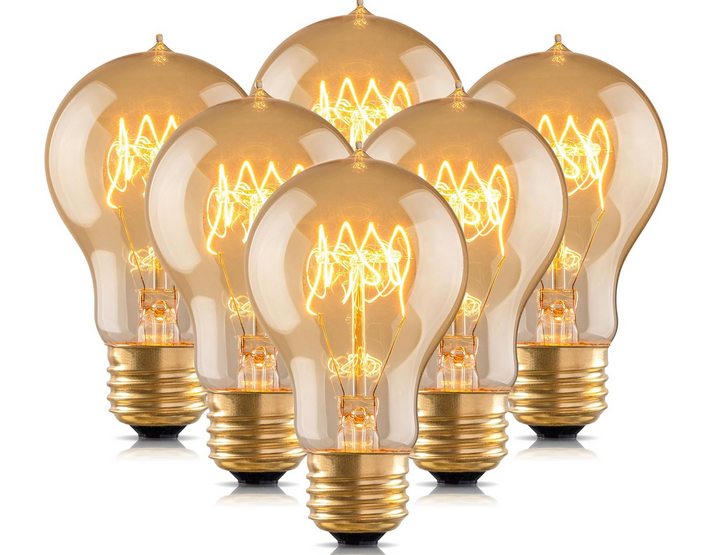
There is an easy fix to this! First of all, after the sun sets, you should dim the lights in your home and refrain from using bright overhead lighting. Switch to lower wattage lamps or salt lamps. One step further would be to order some incandescent bulbs or amber light bulbs, which contain more of the yellow and red spectrum of light that tell us it is night time. (If you need some incandescent light bulbs, check these out on Amazon. The picture is the link.)
These colors are naturally present at the golden hour of sunset and in glowing campfires. The colors nature displays at this time of day signal to our brain that night is approaching— time to wind down, relax and make melatonin. This is not the time to watch a scary movie, go grocery shopping, or work out at the gym.
Second, similar to light bulbs are our screens. Screen use too close to bedtime can have a negative impact on our sleep. Decrease screen exposure 1-2 hours before bedtime, and install a blue light blocking app on your computer or phone. One software program you can install on your computer is called flux. It’s even free! Just go to: https://justgetflux.com/.
There are also screen protectors you can buy for your phone that block the blue light. I got my last screen protector here: https://www.safesleevecases.com/collections — it was actually a freebie when I purchased my radiation-blocking case from them.
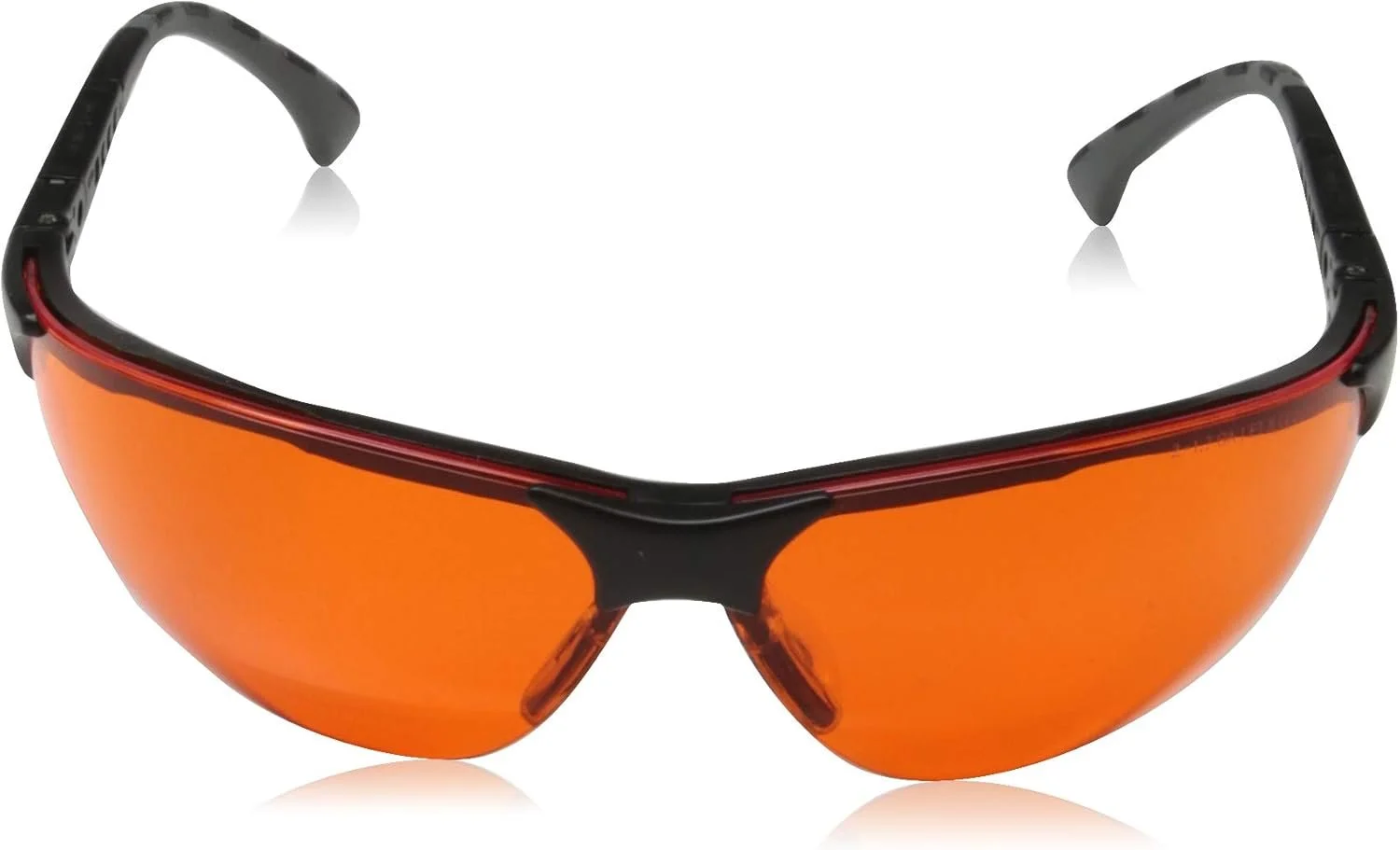
One additional step would be to invest in some blue light blocking glasses to wear in the evening once the sun goes down. The lenses should be tinted to filter out the blue (and ideally green) wavelengths. And the more they wrap around your eye sockets, (blocking more blue light) the better. You can go all out on these glasses. Some great brands are VivaRays, TrueDark and SafetyBlue. (But if you are looking for an affordable option, Amazon has this one I recommend trying out. The picture is the link).
My last suggestion is to reduce your use of sunglasses earlier and later in the day, when the sun is not very strong. You might not be reaching for sunglasses very often this time of the year anyway, which makes this a good time to experiment with this tip. I used to always grab my sunglasses as I headed out the door for a walk, and I would wear them anytime I was driving during the day. But then I learned that wearing sunglasses obsessively makes it difficult for your body to register what time it is. Hats are a good option to switch to (early morning and late afternoon) because your eyes are still registering the unfiltered rays and sending signals to your brain. We all have different sunlight tolerance levels — for our eyes and our skin. So please be cautious here if too much sun gives you a headache or you burn easily—no matter what you do! A sunny beach day or a several hours of daytime driving always necessitate sunglasses for me.
How amazing it is that as I was working on this blog about light, I came across a passage from Father Dave Pivonka’s book, Spiritual Freedom about praying for light. So before we get to our bone broth recipe, I am going to NURTURE you today with this easy prayer prompt… you can even do it right now if you have a quiet minute: Fr. Dave writes, “As a prayer exercise I have people simply pray for light. I invite them to pray before God who is light and imagine them being enveloped in this light (see 1 John 1:5). Oftentimes this simple exercise produces very powerful fruit. Misbeliefs to which individuals were blind slowly begin to appear, and in God’s consuming love, the lies burn away” (Pivonka, 2008, p 119). What a simple exercise to reflect on! I am praying for all of you dear readers, to be enveloped in the light of Christ today.
Lastly, I want to NOURISH you with my bone broth recipe! If you are not making your own bone broth, it is an easy way to add some gut-healing nutrients into your diet. Not only is it great for digestion, it is also helpful for weight loss, hair/skin/nails, detox, joint pain, mood, energy, and healthy teeth and bones (DiMauro, 2017). Phew!
With the holidays coming up, you NEED to make bone broth with your turkey carcass. Do not throw that thing away! The nourishment you can get from the big batch of broth will help you recover after the 4 day weekend binging on heavy refined carbs, sugar, and the pumpkin ale! Bone broth is a breeze too! If you have a turkey carcass, you just have to find a pot it will fit in and cover it with an inch water. Then add some veggies and heat and voila… bone broth! The veggies can be scraps you did not use in the turkey stuffing or on your veggie platter.
I learned this trick from my lovely and very helpful mother-in-law, Barbara. The first time she was at my house for Thanksgiving (which probably was not until about 10 years into my marriage, when I had 4 little ones running around), she took care of getting all the meat off the turkey bones, asked me for a big pot, and got right to work making a broth— on Thanksgiving afternoon! Once that was done, it was super easy to make soup the next day!
Scroll to the bottom for my BONE BROTH INSTRUCTIONS with tips and tricks.
Thank you for spending a few minutes with me today. I’m praying for you during this very busy season: May you be blessed with a golden digestion on these golden days, full of heart-warming and stress-free celebrations with family and friends.
Elizabeth
Bone Broth Recipe:
Here is my basic recipe with some helpful tips:
INGREDIENTS:
Turkey (or chicken) carcass is the main ingredient. Add whatever veggies you have on hand. Some onions, celery and carrots and garlic are always good! If you want to give it a more distinct flavor and antiviral properties you can add some spices, like black peppercorns, bay leaves, a chunk of ginger or turmeric, or some whole cloves.
The magic ingredient in bone broth is apple cider vinegar, which pulls the nutrients out of the bones. For a turkey I would use about 1/2-1 cup of ACV. For a chicken— a big splash or a couple of tablespoons.
Optional step is chicken feet. I know it sounds weird but there is something magical (and yes gross) about it. They add a lot of collagen to the broth and make it more gelatinous. I buy a pound of them at my farmer’s market, divide them up and keep them in little packages in the freezer, ready to drop in the broth.
Some people add herbs now too. I find that if you are cooking the broth a long time, the herbs make it bitter. If you want to add herbs, throw them in the last hour or two it is simmering.
Fill your pot with water so that the carcass is covered by 1-2 inches of water, leaving 2 inches of headspace above the water— about 4-6 quarts for a turkey, or 1 quart per pound of bones if you are using chicken. You can chop or break the bones to make it fit better in your pot.
And DON’T add salt while it is cooking. You can flavor it with salt when it is done.
COOKING METHODS:
Poultry bone broth needs to simmer at least 4-8 hours, and up to 24 hours. I have tried three methods for cooking bone broth over the past 10 years.
Stove-top: This method always makes me a little nervous if you are cooking it overnight. My husband assures me that it will be fine though, and for a turkey, it is what I usually do because the crock pot and instapot are not big enough. You will want to bring the mixture to a boil and then simmer it 4-24 hours. You know your stove best though, so use your own judgement here. You can always divide up the bones and make a couple of batches in the crockpot or instapot— maybe get both of them going at the same time! You most likely will smell this overnight if it is simmering on the stove. I’m not going to lie— no one really wants to smell it all night long. Here’s another option— start it right after your meal and simmer it until you go to bed. Add a couple of scoops of ice to cool it off, put the lid on it and put it in the garage (if your garage gets cold enough). Then just continue cooking it when you wake up the next day! If the ice added too much liquid, simmer it for awhile without the lid.
Crockpot: This one is super easy. Just heat on low for 4-24 hours. You can start it on high for an hour and then turn it down to low to simmer the rest of the time. However, unless it is plugged in in the garage, you also will likely smell it cooking overnight.
Instapot: My new favorite. I wish my pot was big enough to handle a whole turkey carcass! But it only takes about 3 hours total to make a great bone broth this way! If your instapot is not very big, you can always do one batch and freeze some of the bones to make more later. You want to cook it on the soup or broth setting for between 2 and 4 hours, and do not fill beyond the fill line! Allow it to naturally cool/vent at least 30 minutes. I learned this helpful trick from my son: after dinner, he debones a chicken, puts the bone broth ingredients in the instapot and sets it for about 3 hours. He does this around 7 or 8pm. Once it is done cooking it says on warm for several hours (mine stays on warm for 10 hours). Then you can strain and bottle it in the morning when you wake up! And there are no overnight smells with the instapot.
PS: Are you a busy mom in need of some new, easy, and nutritious recipes that you can put on the table in 30 minutes or less?
If you subscribe to my free blog, you will get a welcome email with a beautiful collection of 10 delicious and quick dinner recipes! (If you don’t see it, be sure to check your promotions folder). You will also get my newsletter which comes out when I’m publishing my blog twice a month, or when I’m offering a new program. I’d love to have you!
DiMauro, A. (2017, December 12). Bone Broth Benefits. Food Truth - Inspiring Recipes and Nutritional Therapy. https://www.foodtruthonline.com/blog/2016/2/2/bone-broth-benefits-new-year-health
Pivonka, D. (2008). Spiritual freedom: God’s life-changing gift. Servant Books/St. Anthony Messenger Press.
Savage, R. A. (2024, February 9). Melatonin. StatPearls [Internet]. https://www.ncbi.nlm.nih.gov/books/NBK534823#:~:text=Synthesis%20of%20Endogenous%20Melatonin&text=The%20conversion%20of%20serotonin%20to,which%20innervates%20the%20pineal%20gland.
What are your recommendations when it comes to wearing sunglasses?: Ask Huberman lab. Dexa. (n.d.). https://ai.hubermanlab.com/s/8C8dDWB9
Medical Disclaimer: This information is being provided to you for educational and informational purposes only. It is being provided to educate you about how to take care of your body and as a self-help tool for your own use so that you can reach your own health goals. It is not intended to treat or cure any specific illness and is not to replace the guidance provided by your own medical practitioner. This information is to be used at your own risk based on your own judgment. If you suspect you have a medical problem, we urge you to take appropriate action by seeking medical attention.